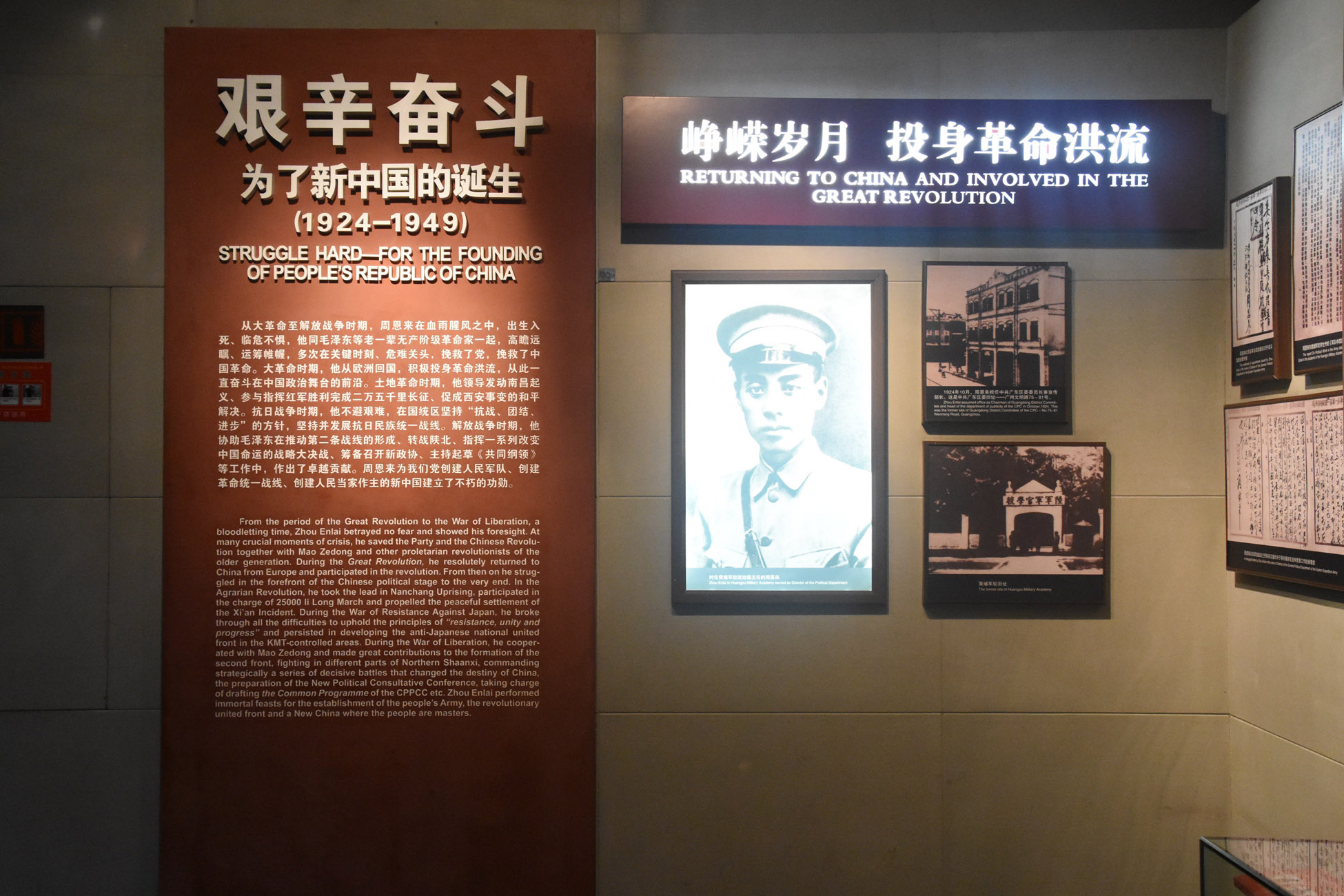
Introduction to the Second Exhibition Hall
During the period from the Great Revolution to the Liberation War, Zhou Enlai braved countless dangers and faced dangers fearlessly. With the older generation of proletarian revolutionaries including Mao Zedong, he looked far ahead, devised strategies and saved the Party and the Chinese revolution at crucial and critical moments. During the Great Revolution period, he returned to China from Europe, actively devoted himself to the revolution and had always strived after his political conviction on the political stage of China. During the Agrarian Revolution period, he was one of the leaders in the Nanchang Uprising, participated in directing the Long March undertaken successfully by the Red Armies, and facilitated the peaceful resolution to the Xi'an incident. During the anti-Japanese war period, while adhering to the policy of "resistance against aggression, unity and progress", he stuck to and developed the anti-Japanese national united front. During the period of the Liberation War, he helped Mao Zedong make excellent contributions in promoting the establishment of the second battle front, moving to and fighting in Northern Shaanxi, directing a series of strategic decisive battles which changed the fate of China, preparing and holding the new Political Consultative Conference and taking charge of drafting the Common Program. Zhou Enlai performed immortal feats in building the people's army for our Party, setting up the revolutionary united front and establishing a new China in which the people are masters.